Stellar · Solar system
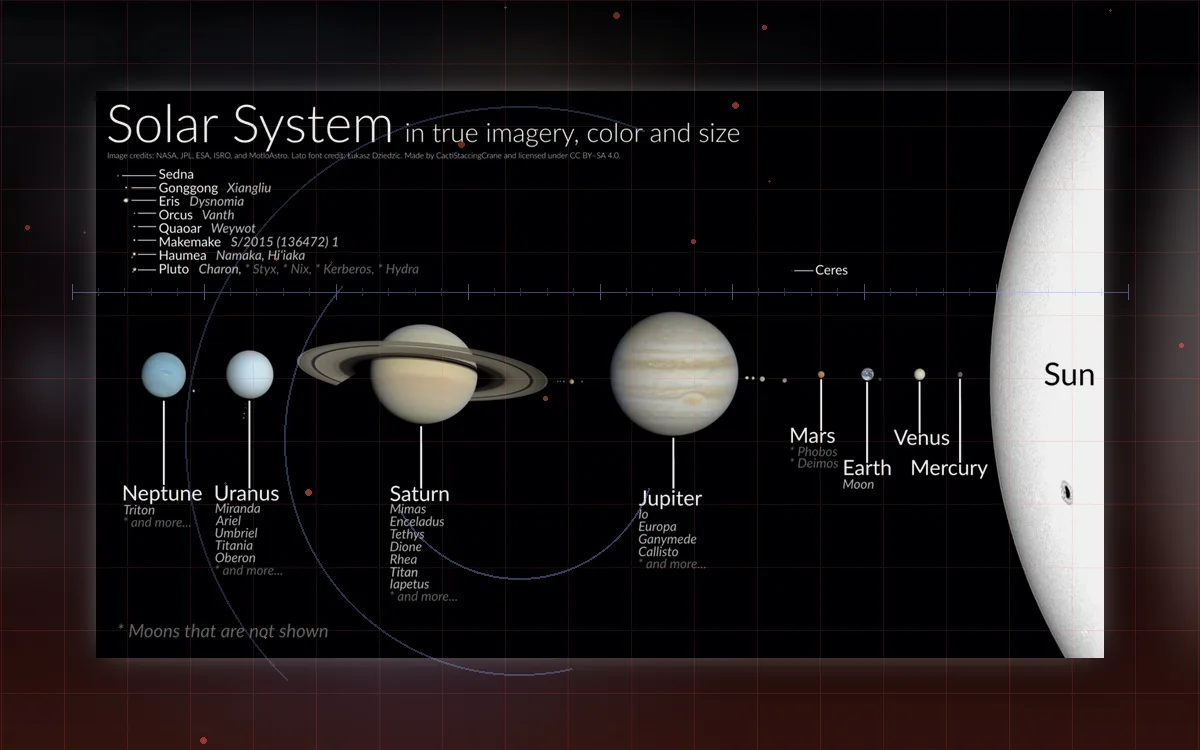
Solar System to Neptune
≈9 billion kmThe broad diameter of Neptune’s orbit reveals how empty a planetary system really is.
Stellar ↔ Stellar
Compare Neptune’s orbital span with the model-dependent diameter of a supermassive black-hole event horizon.
Using the stated linear measurements, M87* event horizon is 4.222× Solar System to Neptune.
The broad diameter of Neptune’s orbit reveals how empty a planetary system really is.
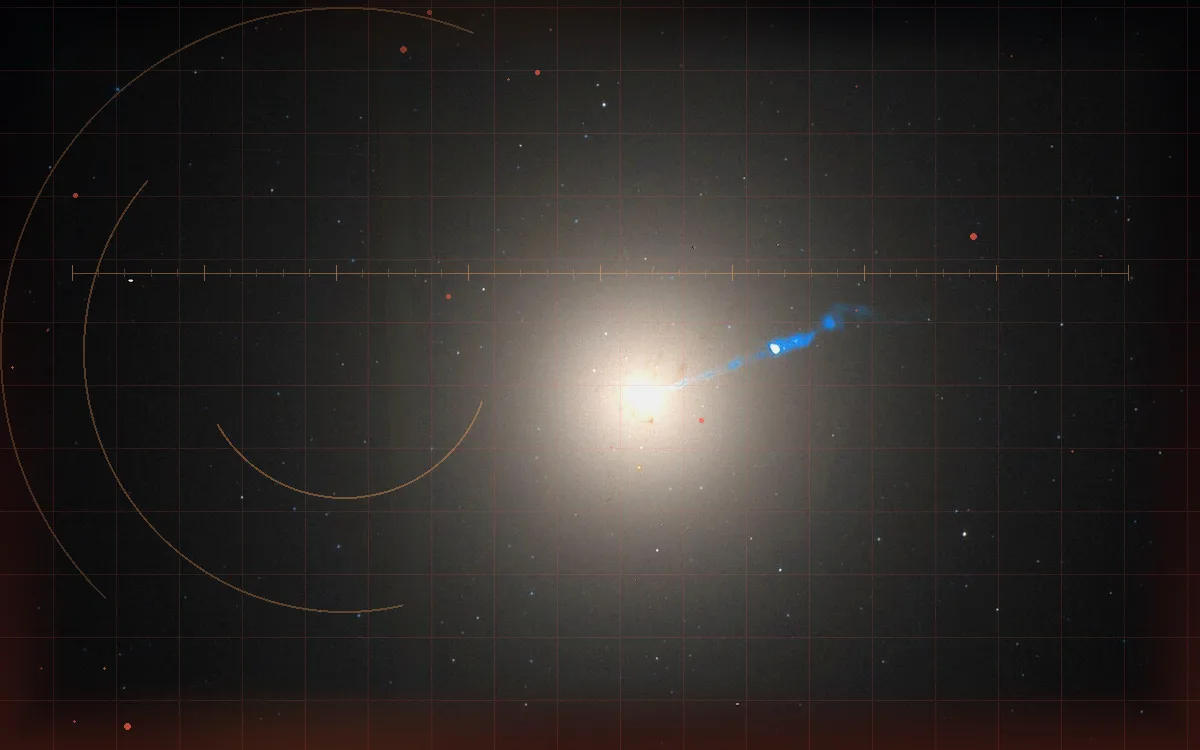
A supermassive black hole whose event-horizon scale rivals the width of the heliosphere.
The answer
About 4.222× Solar System to Neptune linear spans fit across the selected measurement of M87* event horizon.
The metre values can be divided as linear spans, but the two entries do not describe identical kinds of boundary.
Representative, variable and model-dependent values are useful for perspective only when their status remains visible.
Measurement ledger
| Landmark | Value | Measurement | Certainty | Source |
|---|---|---|---|---|
| Solar System to Neptune | ≈9 billion km | Neptune-orbit diameter | Representative | NASA Science ↗ |
| M87* event horizon | ≈38 billion km | Schwarzschild diameter | Model-dependent | NASA Science ↗ |