Stellar · Solar system
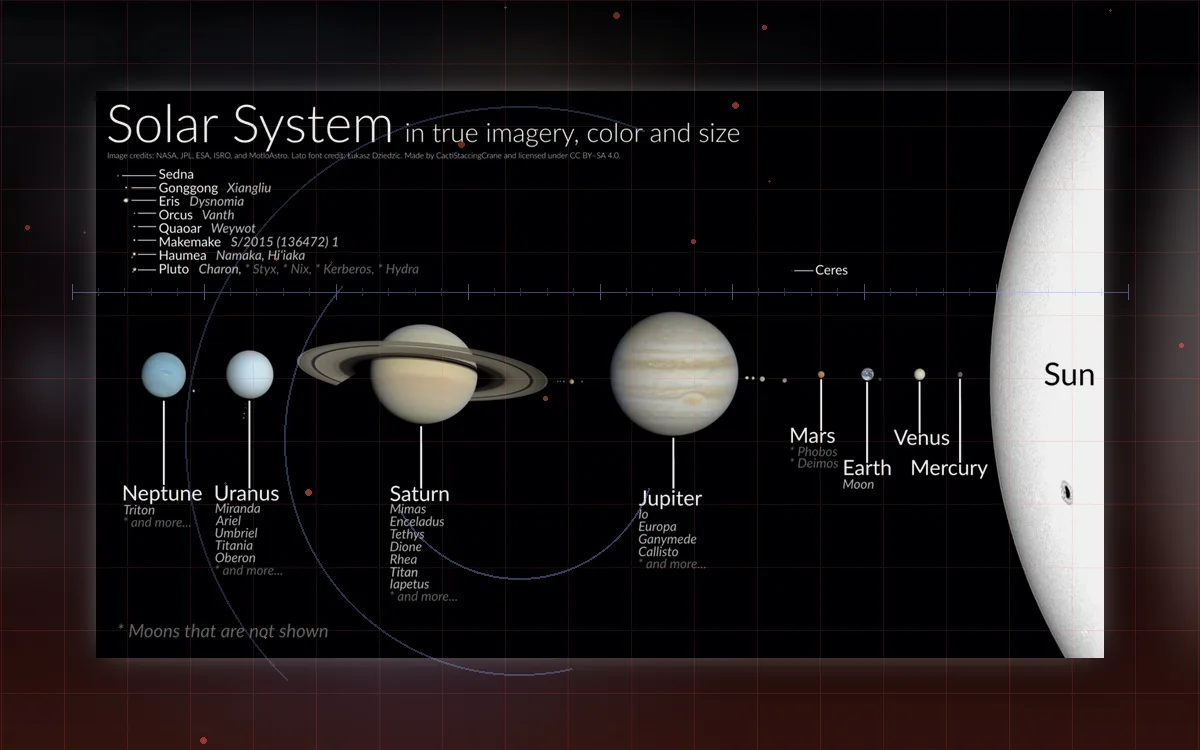
Solar System to Neptune
≈9 billion kmThe broad diameter of Neptune’s orbit reveals how empty a planetary system really is.
Stellar ↔ Interstellar
The answer depends on which boundary you call the Solar System, making this a comparison of two useful but different extents.
Using the stated linear measurements, Oort Cloud is 3,333× Solar System to Neptune.
The broad diameter of Neptune’s orbit reveals how empty a planetary system really is.
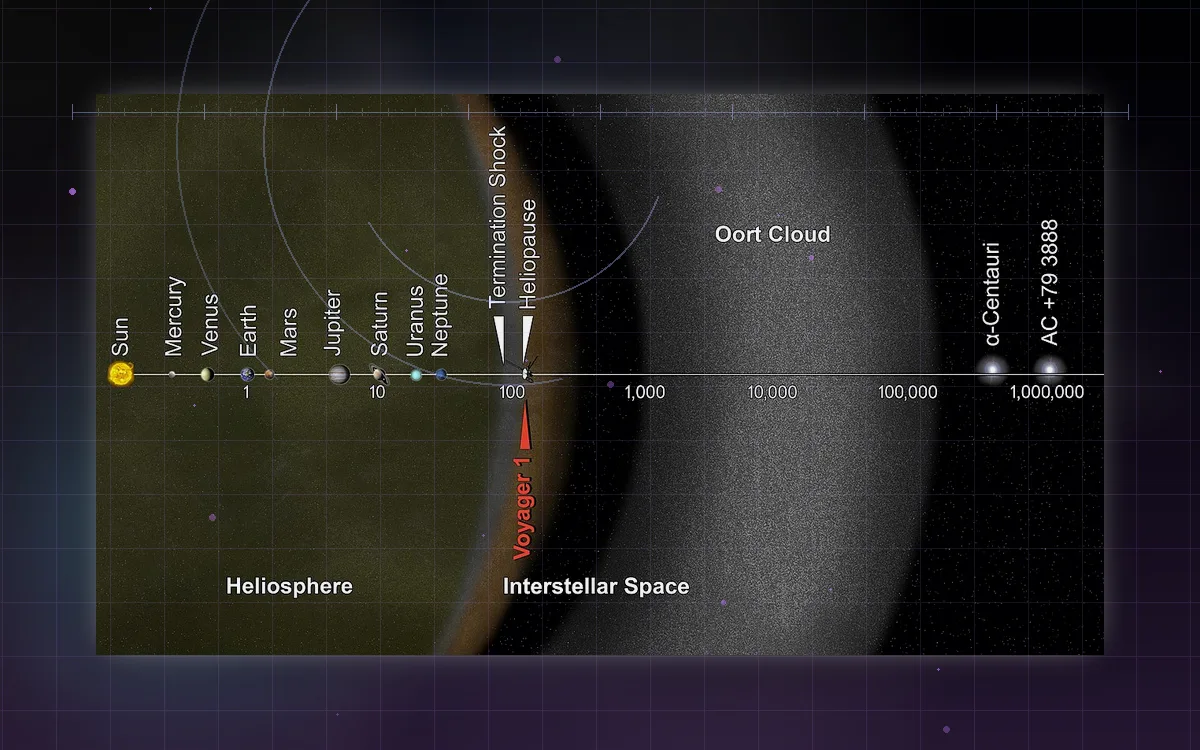
A hypothetical distant reservoir of icy bodies surrounding the planetary system.
The answer
About 3,333× Solar System to Neptune linear spans fit across the selected measurement of Oort Cloud.
The metre values can be divided as linear spans, but the two entries do not describe identical kinds of boundary.
Representative, variable and model-dependent values are useful for perspective only when their status remains visible.
Measurement ledger
| Landmark | Value | Measurement | Certainty | Source |
|---|---|---|---|---|
| Solar System to Neptune | ≈9 billion km | Neptune-orbit diameter | Representative | NASA Science ↗ |
| Oort Cloud | ≈3.2 light-years | representative cloud diameter | Model-dependent | NASA Science ↗ |