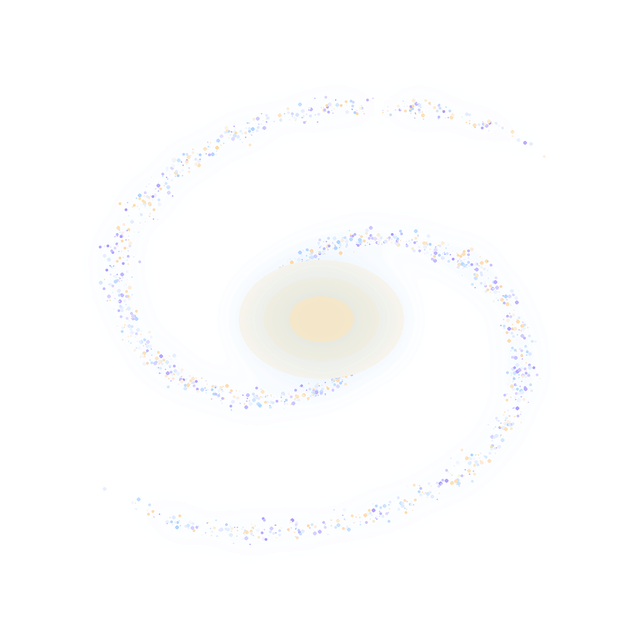
What this measurement describes
The selected line passes through the object from one side to the other. Where a body is not perfectly spherical, the catalog states which diameter is represented.
Galactic scale · Galaxies
LANDMARK 114 / 121
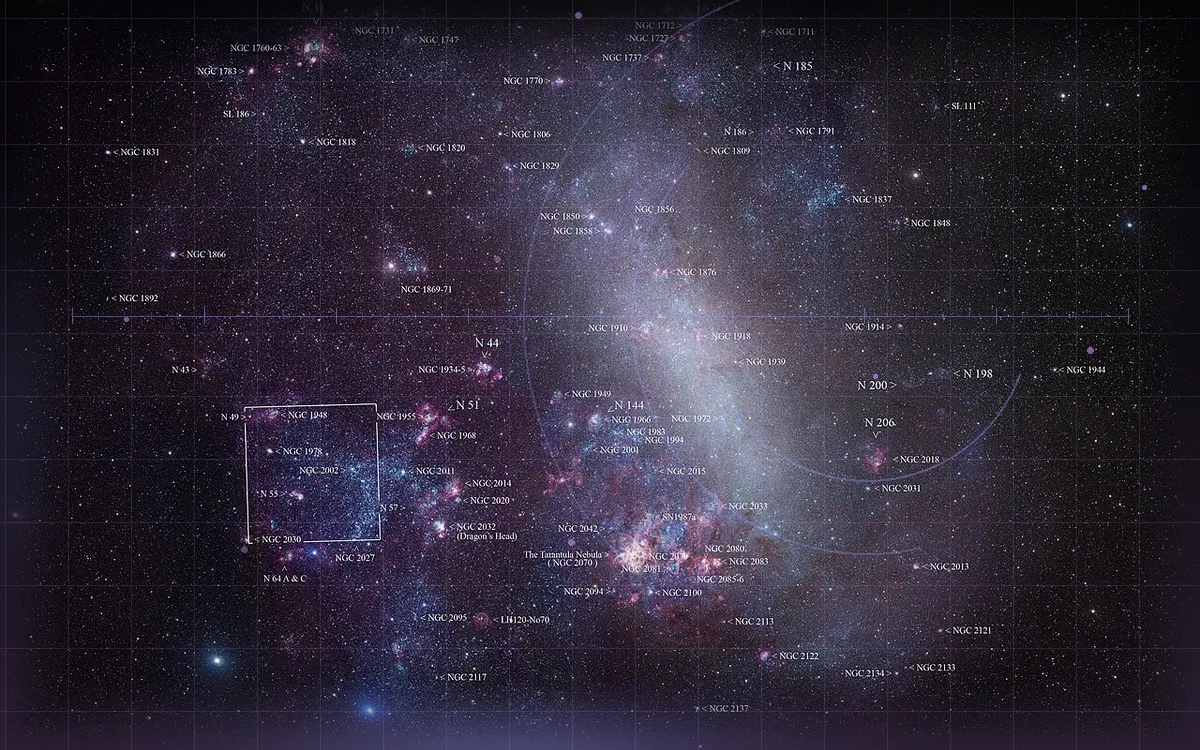
A nearby dwarf galaxy orbiting the Milky Way and visible from southern skies.
WonderIt contains giant star-forming regions such as the Tarantula Nebula.
 1020metres
Scale context
Wonder · Explore · Deep
The selected line passes through the object from one side to the other. Where a body is not perfectly spherical, the catalog states which diameter is represented.
The value depends on a scientific model or inferred boundary. It is not a directly touched physical edge.
Vastoscope compares the SI value in metres for this representative visible diameter. A ratio is mathematically valid as a linear span, while the interface identifies when the two selected definitions differ.
Familiar scale bridges
These anchors are selected by logarithmic proximity from familiar human, engineered, planetary and cosmic references.
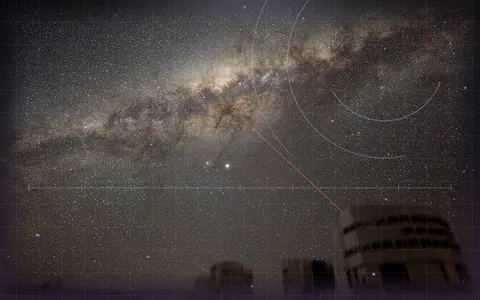 Galactic · GalaxiesLMC ↔ Milky Way7.14×
Our barred spiral galaxy, containing the Sun and hundreds of billions of stars.
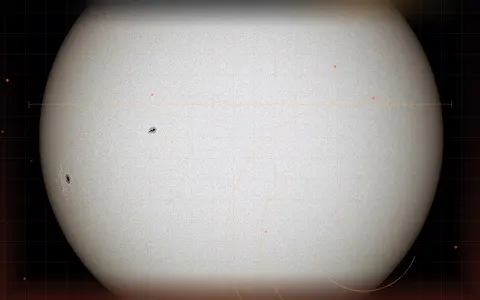 Stellar · StarsLMC ↔ Sun95.10 billion ×
The star containing almost all the solar system’s mass and powering nearly every surface ecosystem.
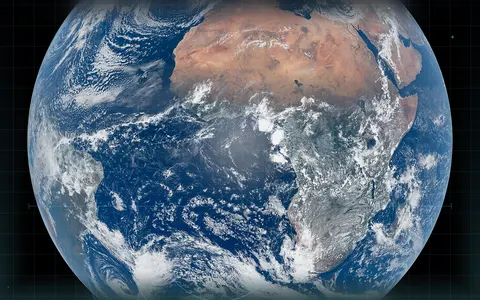 Planetary · Solar systemLMC ↔ Earth10,394.76 billion ×
Our ocean world, measured by mean diameter — the anchor for familiar planetary comparisons.
Evidence trail
Vastoscope keeps the displayed number separate from its measurement type and certainty. Representative and model-dependent values are intentionally labelled instead of presented as exact edges.
Nearby on the logarithmic rail
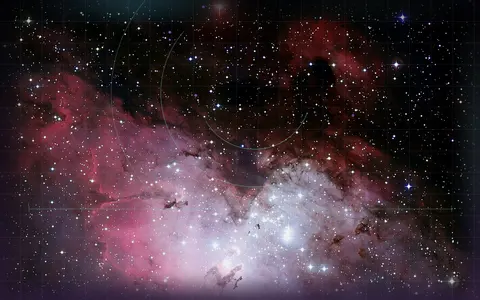 Interstellar · NebulaeEagle Nebula≈70 light-years
A star-forming region famous for the Pillars of Creation.
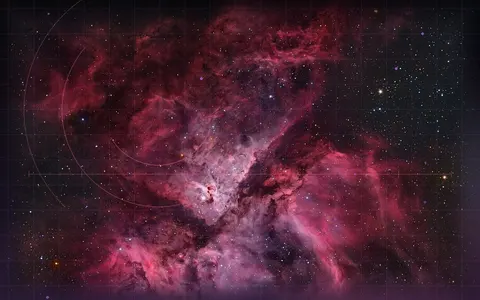 Interstellar · NebulaeCarina Nebula≈300 light-years
A vast star-forming complex filled with massive young stars, dust lanes and glowing gas.
Galactic · GalaxiesMilky Way≈100,000 light-yearsOur barred spiral galaxy, containing the Sun and hundreds of billions of stars.
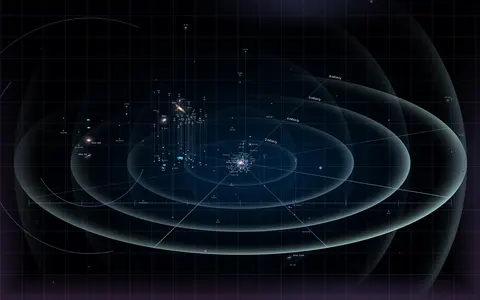 Galactic · Cosmic structureLocal Group≈10 million light-years
A gravitational neighbourhood containing the Milky Way, Andromeda and dozens of smaller galaxies.
Next signal
Continue by scientific relationship, narrative journey or a deliberately distant scale jump.