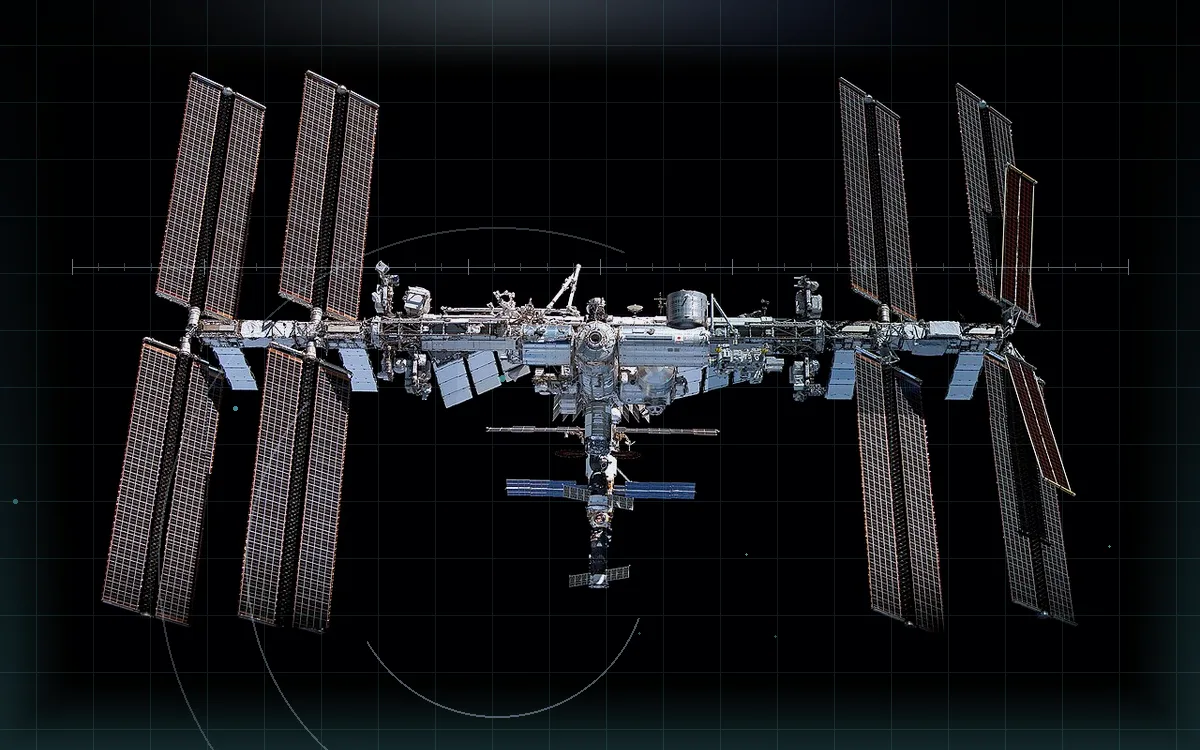
Planetary · Spaceflight
International Space Station orbit
≈408 km highThe station circles in low Earth orbit, close enough to cross the sky as a bright moving point.
Planetary ↔ Stellar
Both entries are distances from Earth, revealing how tightly low Earth orbit hugs the planet.
About 942.16× International Space Station orbit linear spans fit across Earth–Moon distance.
The station circles in low Earth orbit, close enough to cross the sky as a bright moving point.
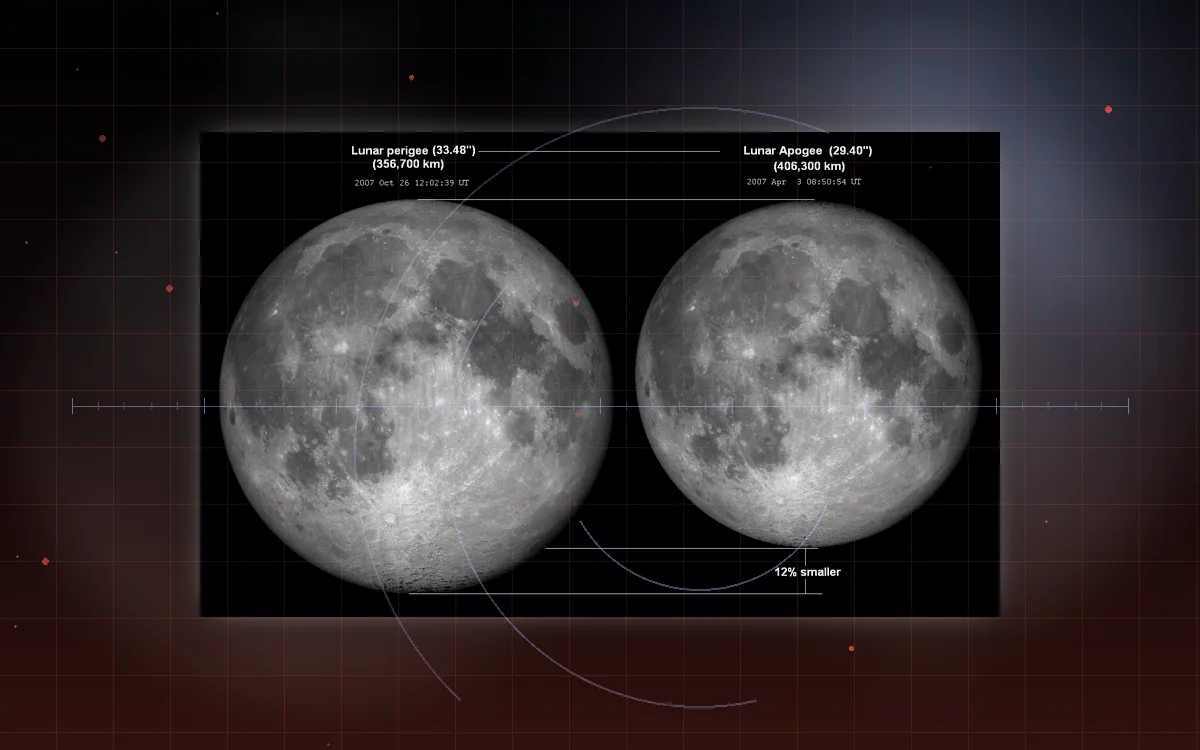
The average centre-to-centre distance separating Earth and the Moon.
The answer
About 942.16× International Space Station orbit linear spans fit across the selected measurement of Earth–Moon distance.
The metre values can be divided as linear spans, but the two entries do not describe identical kinds of boundary.
Representative, variable and model-dependent values are useful for perspective only when their status remains visible.
Measurement ledger
| Landmark | Value | Measurement | Certainty | Source |
|---|---|---|---|---|
| International Space Station orbit | ≈408 km high | representative orbital altitude | Variable | NASA Science ↗ |
| Earth–Moon distance | ≈384,400 km | mean centre-to-centre distance | Variable | NASA Science ↗ |